




Building a well-diversified investment portfolio is a fundamental step toward achieving financial security and growth. It involves strategically combining various assets to reduce overall risk while aiming for consistent returns over time. Rather than simply picking a few popular stocks, a thoughtful approach considers your personal financial situation, your goals, and your willingness to take on risk. This structured method helps protect your capital from the volatility inherent in specific market segments and sets a solid foundation for long-term wealth accumulation.
Overview
- Begin by clearly defining your financial goals and honestly assessing your personal risk tolerance.
- Familiarize yourself with different asset classes, including stocks, bonds, and cash equivalents.
- Implement diversification across various asset types, industries, and geographical regions to mitigate specific risks.
- Regularly review your investment portfolio to ensure it remains aligned with your objectives and market conditions.
- Be prepared to rebalance your portfolio periodically to maintain your desired asset allocation.
- Consider broad market exposure through vehicles like index funds and ETFs, especially for large markets such as the US.
- Understand that diversification is an ongoing process, not a one-time setup.
Understanding the Basics of an Investment Portfolio
An investment portfolio is essentially a collection of financial assets owned by an individual or institution. These assets can include a wide range of investments such as stocks, bonds, mutual funds, exchange-traded funds (ETFs), real estate, and cash equivalents. The primary purpose of building a portfolio is to generate returns, whether through capital appreciation, interest payments, or dividends, while managing risk. Before selecting any specific investments, it is crucial to establish clear financial goals – whether you are saving for retirement, a down payment on a house, or a child’s education. Equally important is understanding your risk tolerance. Are you comfortable with significant market fluctuations for potentially higher returns, or do you prefer a more stable, albeit slower, growth path? Your answers to these questions will dictate the appropriate mix of assets within your investment portfolio. For instance, a younger investor with a long time horizon might opt for a more aggressive portfolio heavily weighted towards stocks, whereas someone nearing retirement might favor a more conservative approach with a higher proportion of bonds.
Key Principles for Diversifying Your Investment Portfolio
Diversification is the cornerstone of effective risk management within an investment portfolio. The adage “don’t put all your eggs in one basket” perfectly encapsulates this principle. By spreading your investments across various assets, you reduce the impact of any single investment performing poorly. If one sector or company experiences a downturn, other parts of your portfolio may continue to perform well, thus cushioning the overall impact. Effective diversification involves several layers:
- Across Asset Classes: Combining different asset types like stocks, which offer growth potential but higher volatility, with bonds, which provide stability and income, helps balance risk and return.
- Across Industries and Sectors: Within stocks, diversify across different industries (e.g., technology, healthcare, consumer staples) to avoid being overly reliant on the performance of a single sector.
- Across Geographies: Investing not just in domestic markets, such as the US stock market, but also in international markets, can provide additional diversification benefits, as different economies may perform differently at various times.
- Across Company Sizes: Including companies of different market capitalizations (large-cap, mid-cap, small-cap) can also add another layer of diversification.
The goal is to select assets that do not always move in the same direction, reducing the overall volatility of your investment portfolio.
Selecting Assets for Your Investment Portfolio
Once your goals and risk tolerance are defined, the next step is populating your investment portfolio with specific assets. For many investors, particularly those new to the market or seeking simplicity, broad market index funds and Exchange-Traded Funds (ETFs) are excellent choices. These funds automatically provide diversification by holding a wide range of underlying securities, often tracking a major market index like the S&P 500 in the US. This gives you exposure to hundreds or thousands of companies with a single purchase, without needing to research individual stocks. For those who prefer a more hands-on approach or have specific knowledge, individual stocks and bonds can be included, but this requires more diligent research and monitoring. When choosing bonds, consider government bonds (like US Treasuries), corporate bonds, or municipal bonds, each with different risk and return profiles. Real estate, either directly or through Real Estate Investment Trusts (REITs), can also play a role in further diversifying an investment portfolio. The key is to select assets that collectively meet your desired asset allocation, which is the proportional mix of different asset classes chosen to match your risk tolerance and investment goals.
Monitoring and Rebalancing Your Investment Portfolio
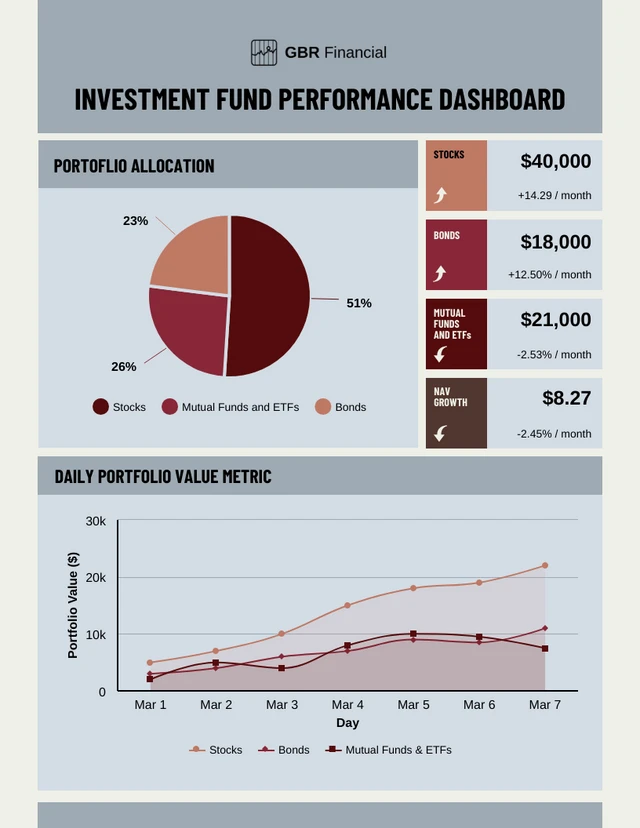
Building a diversified investment portfolio is not a one-time event; it requires ongoing attention. Market conditions change, and over time, the initial allocation of your assets can drift. For example, a strong stock market might cause the stock portion of your portfolio to grow significantly, making it a larger percentage than you originally intended. This shift can increase your overall risk profile without you realizing it. Therefore, regular monitoring, typically once or twice a year, is essential.
Rebalancing is the process of adjusting your portfolio back to your target asset allocation. If stocks have outperformed and now represent a larger share of your investment portfolio than desired, you would sell some stocks and use the proceeds to buy bonds or other underrepresented assets. Conversely, if bonds have outperformed, you might sell some bonds to buy stocks. This systematic approach helps you “buy low and sell high” by trimming assets that have performed well and adding to those that have underperformed, all while maintaining your preferred risk level. Life events, such as marriage, having children, or approaching retirement, might also necessitate a reevaluation of your goals and risk tolerance, leading to a deliberate adjustment of your investment portfolio strategy. Consistent review and rebalancing ensure your portfolio remains aligned with your evolving financial objectives and market realities.